How Peer Support is Changing Substance Use Recovery in Liberia
With community-based support, Peter. J Wallace stopped using substances, returned to school, and is now helping others navigate recovery.
Posted on Sep 2, 2026

At 23 years old, Peter J. Wallace is back in high school working toward a future that he hopes will include being an electrician. He’s also a peer educator, helping other young people navigate the challenges of substance use and recovery in rural Liberia.
“I feel grateful for life,” says Wallace. “Although I’ve faced depression, body pain, and confusion, being here gives me encouragement and hope.”
Wallace joined Partners In Health (PIH) Liberia’s peer support group program in August 2024 after visiting J.J. Dossen Memorial Hospital in Maryland County. When he arrived, he was experiencing symptoms including insomnia, a racing heart, headaches, and nausea. He also felt as though something was crawling under his skin.
After a thorough medical assessment, he was diagnosed with severe alcohol use disorder and alcohol withdrawal by Dr. Helen Tedros Haile, PIH Liberia’s mental health lead and one of roughly 10 psychiatrists in the entire country. Haile prescribed various medications to support his recovery and withdrawal symptoms; scheduled an individual counseling session; and referred him to the weekly peer support group.
Wallace immediately began attending the group sessions, held every Saturday at PIH-supported J.J. Dossen Memorial Hospital, where approximately 22 attendees participate each week.
“In one month, we saw tremendous improvement in his symptoms,” says Haile, who provides clinical assessments and manages psychiatric care for participants in the program.
Before joining the program, Wallace says alcohol and other drugs were a regular part of his life. The peer support program helped him understand how substance use was affecting his health, he says, and he eventually stopped using substances altogether.
With support from PIH, Wallace returned to school in 2025. He’s now in tenth grade and is hopeful about his future.
“I have three dreams: to become an electrician, a businessperson, or to join the Liberian force,” says Wallace. “Among them, I am most focused on becoming an electrician because I already have some knowledge in that field.”
In March 2025, he became a peer educator to help others who face similar challenges in recovery. Peer educators co-facilitate the group sessions, raise awareness on challenges related to substance use in their communities and schools, connect others to group sessions and other treatment options, identify supportive family members, and more. Peer educators are instrumental in addressing stigma in the community and have been a key component of the success of this program.
Community-based support
The peer support groups began in 2019, initially informal and with a broader focus than substance use. As the mental health team saw increasing medical challenges among young people using substances, including kidney disease, liver disease, and tuberculosis, they began developing a more formal, structured group.
Willis Archie Yansine, a nurse and PIH Liberia’s mental health clinical coordinator, spearheaded the effort. He began visiting communities where young people were using substances to better understand what was happening and build relationships.
At first, some community members were hesitant. Yansine had to earn their trust, including addressing concerns about privacy and stigma. Over time, community members began to understand the importance of the program, welcomed other PIH staff to their community, and agreed to participate in the peer support sessions.
“I always see Partners In Health as an opportunity to build our broken system,” says Yansine, a PIH employee since 2016.
In 2022, the mental health team developed and piloted a community-based substance and alcohol use curriculum. It includes 30 standalone sessions covering topics such as mindfulness, emotional regulation, creating routines, strengthening support systems, recognizing relapse risks and patterns, and respectful communication. After each session, the group eats lunch together.
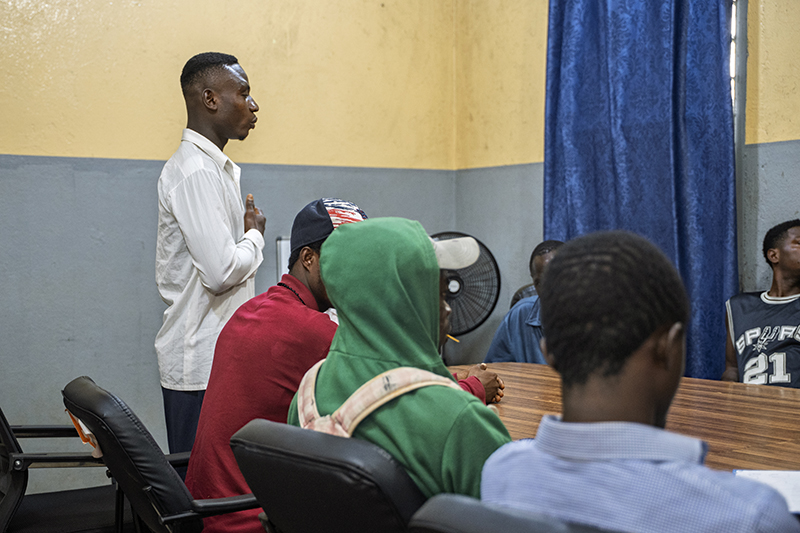
Like Wallace, many of the participants are regular attendees. No matter where someone is in their recovery, PIH staff meet them where they are and accompany them throughout their journey, connecting them with resources, and supporting them as they return to school and work.
“We do what we can to take care of them and see the changes through time,” says Haile.
Since the peer support program’s inception in Liberia, the team has conducted more than 140 sessions, with 123 people attending and finding a space for connection and group support.
Cross-site collaboration, building trust
At PIH, continuous learning and cross-site collaboration are key parts of our work across the four continents where we operate. For example, the peer support program developed in Liberia, in collaboration with global colleagues, is now informing work in neighboring Sierra Leone.
In May 2026, Sierra Leone colleagues traveled to Liberia for a learning exchange focused on community-based substance use support efforts. The teams shared their experiences and visited communities in Maryland County to see PIH’s work in practice.
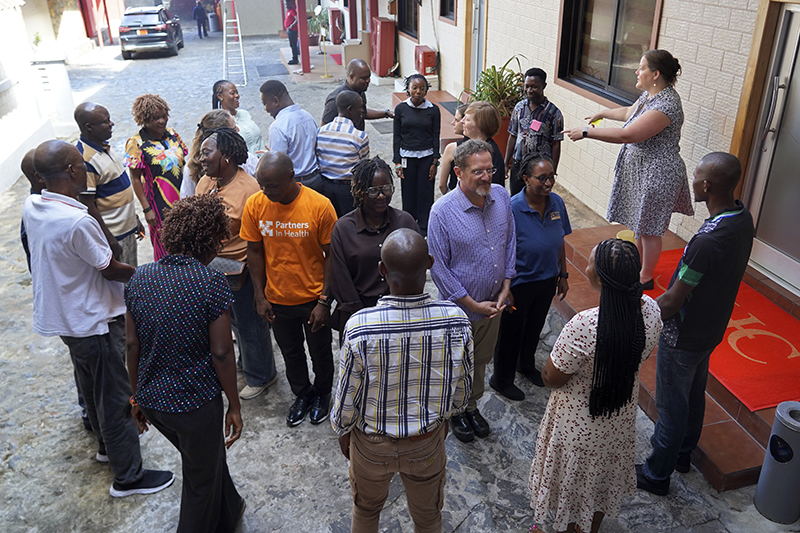
Chenjezo Gonani, PIH Sierra Leone’s mental health program manager, was particularly struck by the relationships the Liberia team has built with community members.
“It was so impressive,” reflects Gonani, after visiting a community where young people were using substances. “Once the PIH team was there, people were even mentioning names of providers. That really stood out to me because it showed that these were not just health workers visiting a community, but they had become trusted members of the community.”
Following the exchange in Liberia, colleagues from the Liberia team traveled to Sierra Leone to train colleagues on the peer support program. The Sierra Leone team is now adapting Liberia’s model to its own context in rural Kono District and at the Sierra Leone Psychiatric Teaching Hospital in capital city Freetown.
In Liberia, peer support sessions continue every Saturday. After the 30 standalone topics are complete, individuals in remission are invited to participate in another, separate group with advanced topics—such as mentorship and building financial security—around long-term recovery. At the request of the group members, PIH Liberia is also developing additional curricula specific to women and economic empowerment.
And while Yansine and his colleagues still visit communities, they no longer need to recruit participants. Young people involved in the program have begun recruiting others themselves, regularly bringing friends to sessions, and developing their own internal leadership structures for the group.
“Archie is my [nurse] and also my motivator,” says Wallace. “He [is] always telling me things that I need to know.”
Wallace, who once came to the group looking for support, now provides it to others.
“I want to make a difference and bring positive change to my family,” he says.