Experience a Tuberculosis Hill Day on Capitol Hill
Get a glimpse into the record-breaking two-day tuberculosis advocacy event
Posted on Apr 8, 2026

Partners In Health (PIH) utilizes hill days to bring constituent concerns directly to their members of Congress. A hill day is an issue-specific advocacy event where constituents travel to Washington, D.C., or their state capitol to meet with legislators or staff to influence legislation or funding for a particular cause. According to congressional staffers, in-person visits from constituents are the most influential way to communicate with a legislator who is undecided on an issue.
PIH has helped organize hill days to advocate for tribal health care funding, community health workers, and overall global health funding, among a number of other key issues related to health equity. Most recently, PIH joined hundreds of other advocates for our annual Tuberculosis (TB) Hill Day.
We invite you to follow Hannah Kenny, a TBFighter and member of PIH Engage, through her 2-day experience as both an organizer and an advocate for this year’s TB Hill Day. Travel with us to Washington, D.C., on March 2 and 3 through the following images and reflections:
Day 1: Training Day
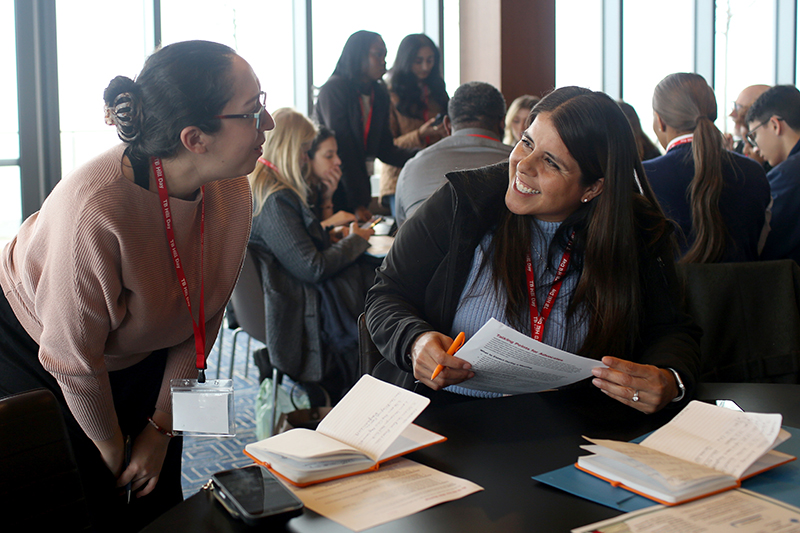
This year, Georgetown University hosted PIH and TBfighters, alongside other TB advocates and experts, for the training day preceding a day full of congressional meetings at Capitol Hill. The training day is designed to give all Hill Day participants a chance to learn how to navigate their meetings with congressional offices and, importantly, gives folks a chance to connect with old and new friends in the fight against TB.
“This was my second TB Hill Day, and it’s so fun to see so many familiar faces,” Kenny said. “The TB community doesn’t have a lot of opportunities like this, where experts, survivors, and grassroots advocates are all in the same room. It feels like a class reunion and the first day back at school at the same time.”
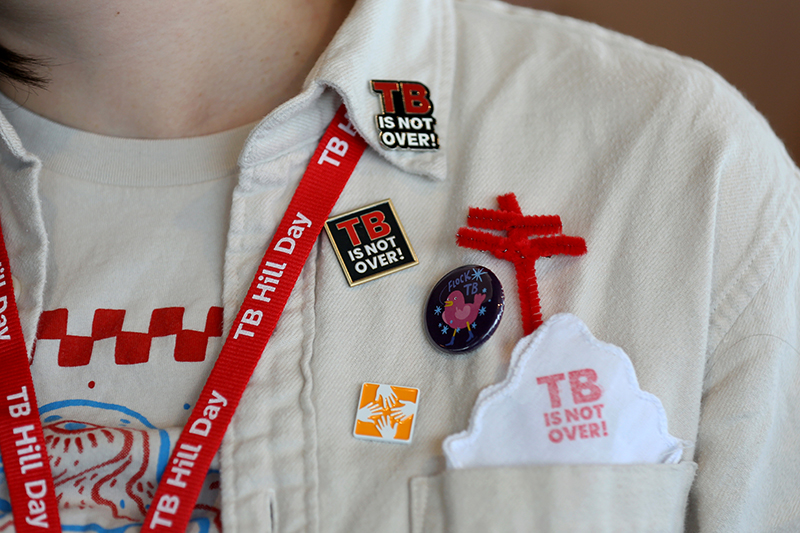
The day starts at noon, allowing for time to travel to D.C., and includes getting signed in, receiving informational folders, and being gifted with lots of merch. This year, there were friendship bracelets, pocket squares, pins, notebooks, bookmarks, and pens that were traded around between attendees.
Kenny helped kick off the training day with fellow TBFighter, Tori Sandifer, by sharing some housekeeping reminders and thank-yous. Once the training officially started, there were presentations from TB survivors and advocates, sharing information that advocates can use in their meetings: stories of survival, information about government funding processes, tips for congressional meetings, and talking points.
Training day also provides a chance for breakout sessions where people get to meet the other members with whom they’ll be advocating alongside, and gives them a chance to rehearse for their meetings.
“During state breakout sessions, everything you learned during training comes together,” Kenny said. “Last year, I only went to meetings in my state of California, so my state breakout time was all with one group. This year, I accompanied meetings for six different states. It was really cool to check in with so many different groups and hear how they were coming up with unique strategies for each meeting.”
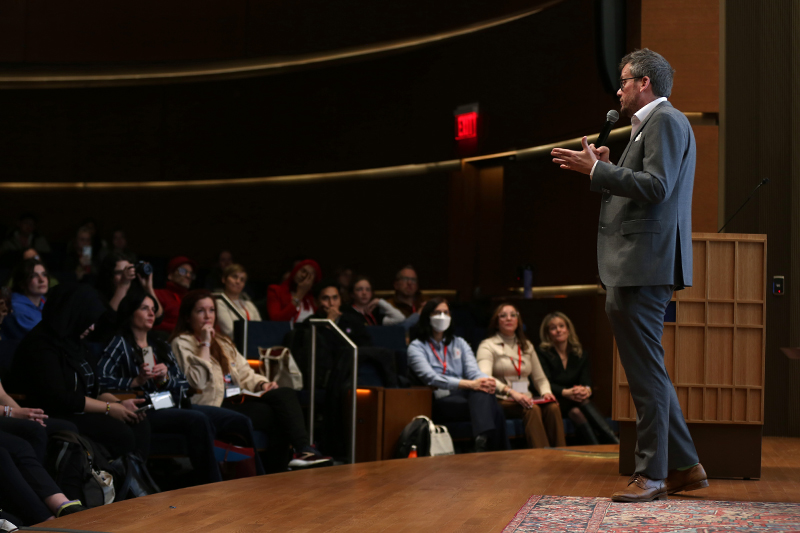
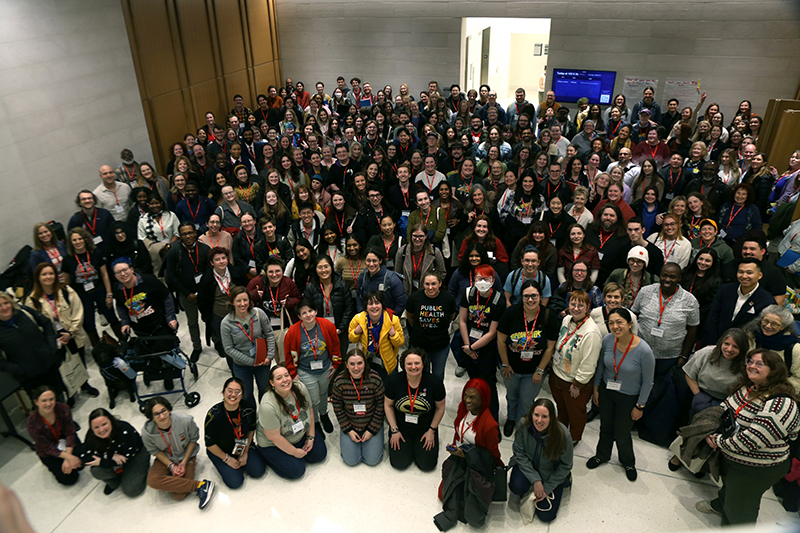
The training sessions concluded with a message from bestselling author and PIH Trustee, John Green, where he thanked everyone for being a part of the movement to end TB and emphasized the importance of the advocacy that happens both on the Hill and throughout the year. To wrap up the day, all the nearly 300 attendees gathered for a group photo.
“We had so many people that it was hard to find a space where everyone would fit in a photo,” Kenny shared. “TB advocates have been persistently coming to the hill for over a decade, but this year, we focused on really strategic growth, trying (and succeeding!) to find participants from all 50 states.”
Day 2: Hill Day
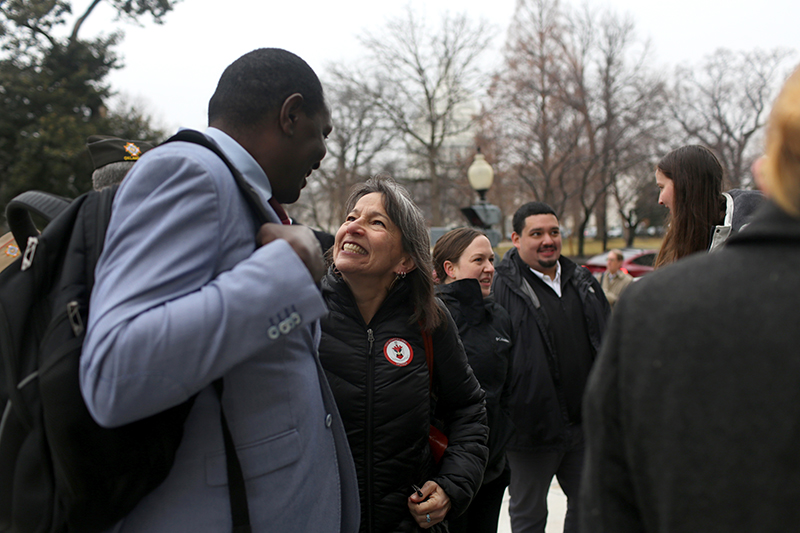
At 8 a.m. on March 3, hundreds of folks donning “TB isn’t over” pins—that Kenny designed—gathered on the front steps of Capitol Hill. This time gives everyone a chance to connect once again before everyone splits into their meeting groups and heads out to offices for the day.
For this year’s TB Hill Day, there were over 260 congressional meetings held—including meetings with every office in the Senate—to advocate for resources to help eliminate the world’s deadliest infectious disease. Many of the advocates in the group who have participated in other hill days have never seen one of this size.
“One thing that makes this hill day really special is not only how many meetings we have for a group of our size, but also how these meetings were all scheduled and managed by our own advocates,” Kenny said. “Some people doggedly followed up with offices five, six, or seven times, to make sure a meeting happened. This scale is the result of a giant group effort.”
After another group photo on the steps of the Capitol, everyone dispersed to the building of their first meeting. The Congressional buildings can be a bit challenging to navigate, and include having to go through security, so it helps to have time—and accompaniment—to find the correct offices.
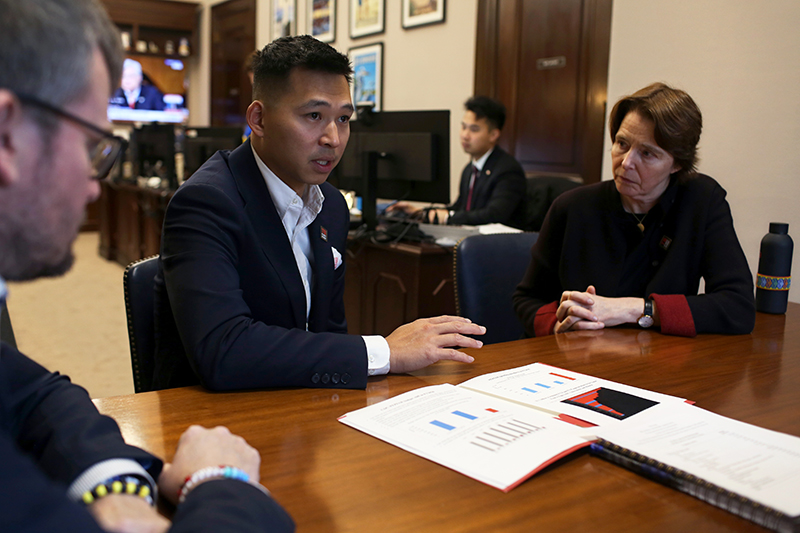
Most attendees would be attending at least three meetings—which generally last around 30 minutes each—but some folks had up to twice that. Kenny, for example, attended six meetings.
“Every meeting group is a little different,” Kenny explained. “All meetings will have at least one constituent, and some of them have many, like California or New York Senate meetings. Survivors and experts are also sent to keep meetings to share their stories or make a stronger argument.”
Advocates generally arrive at their meeting office a bit early so they can huddle quickly before they enter. This gives them a chance to reestablish their roles, rehearse as needed, or discuss any ideas or suggestions that have come up in other meetings throughout the day.
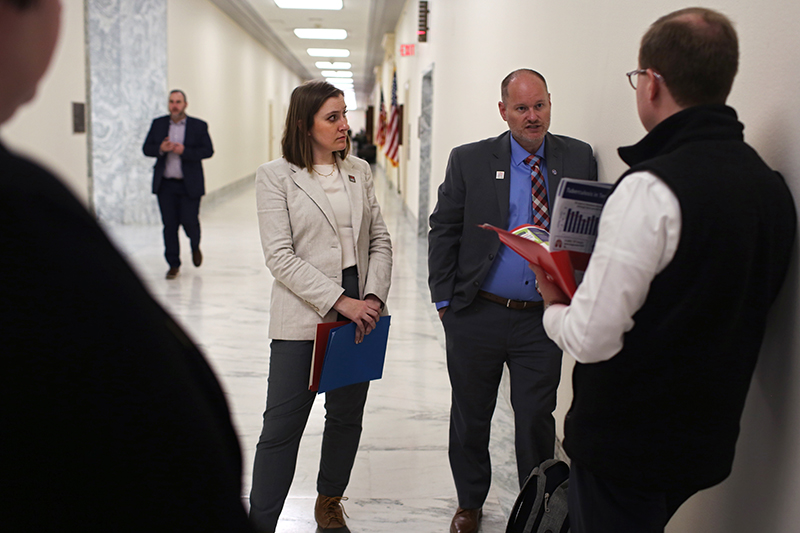
The vast majority of meetings are with the congressional member’s staff, as opposed to the members themselves. These staffers then take the concerns and requests of constituents to their boss, the member of Congress.
“The most important part of these meetings is showing up,” Kenny said. “We know that our advocacy is going to take repeated efforts to achieve our goal of ending TB. I hope that by continuing to show up, we remind our representatives that we’re serious about this and that ending tuberculosis has a constituency behind it.”
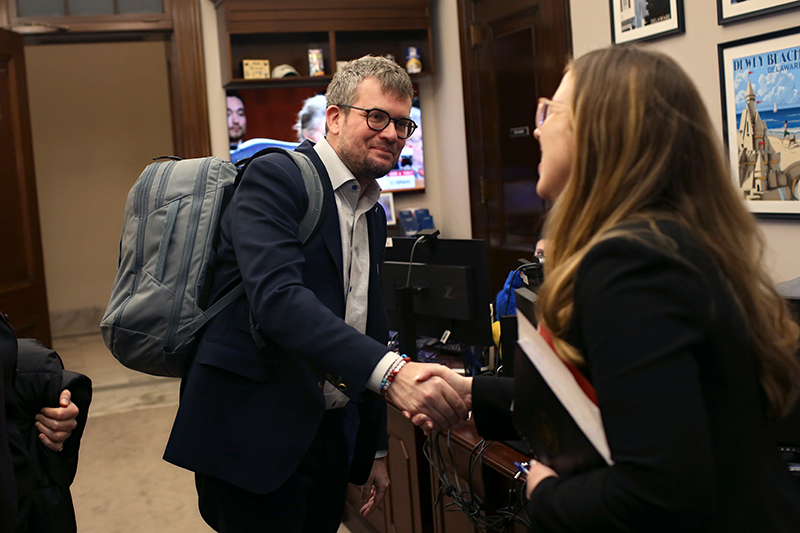
With such a significant number of meetings, TB Hill Day was exhausting for many advocates, generally wrapping up around 5 p.m.
“It was a long day, and came after a long period of hard work in preparation, but the tiredness at the end felt satisfying, like getting to the summit of a mountain after a hike,” Kenny shared.
Following their last meeting, attendees could choose how to spend the rest of their evening—some flew home, some chose to explore D.C., and some just couldn’t get enough of the infectious group energy and chose to continue spending time together.
“This event, and this group of people, are truly something special," Kenny said. “It would be easy to become cynical about the task at hand. But cynicism was not on offer at TB Hill Day. I was surrounded by a group of people who truly believe (as do I) that we can end TB together. That faith and grit are things I value and carry with me in other parts of my life all year long.”
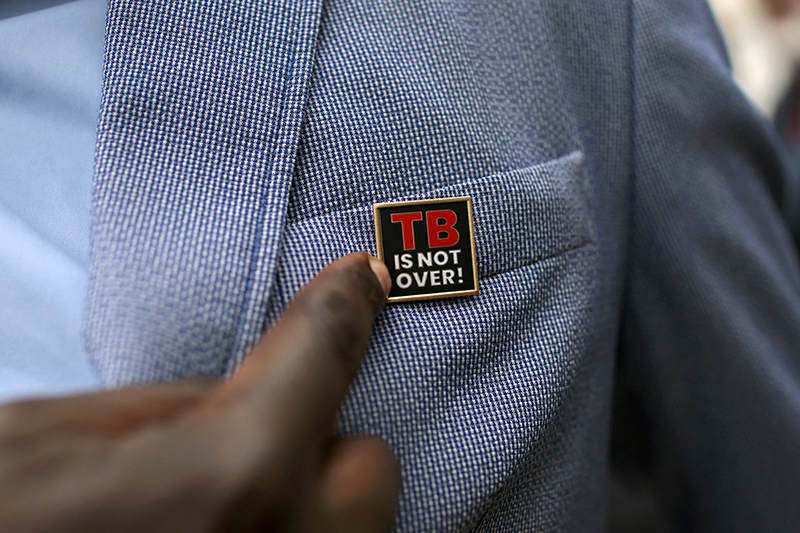
Once the day concluded, advocates began preparing their follow-up messages, completing next steps, and started dreaming and scheming for next year’s event, already getting excited for TB Hill Day 2027.
Join the Movement
Build upon the momentum of TB Hill Day by advocating for TB funding.