
How an 8-Year-Old's Brain Surgery Strengthened Trauma Care in Rural Liberia
In 2022, Dennis Toe underwent the first-ever surgery of its kind at a PIH-supported hospital in rural Liberia. Today, he’s thriving.
Posted on Aug 12, 2026

When Dennis Toe, 8, arrived at a Partners In Health (PIH) facility in rural Liberia after being struck by a motorbike in 2022, his chances of survival were slim. He was partially paralyzed and blood was pooling in his skull, compressing his brain.
Without a neurosurgeon on staff, or advanced imaging available, PIH clinicians across departments came together to diagnose his injuries and determine the next best steps.
“We were a bit anxious,” reflects Dr. Gerald Ekwen, a general surgeon who operated on Toe. “We had never done this extensive craniectomy where we had to remove a flap of his skull.”
A craniectomy is a type of brain surgery which involves temporarily removing a piece of bone, known as a flap, to access the brain and relieve pressure. Ekwen and his team discussed the surgery with Toe’s grandfather and guardian, Karbeh Sebo, and cautioned him that there’s a chance he’d die.
“Encouragement from [Karbeh Sebo] motivated us to proceed,” says Ekwen, who has worked at PIH Liberia since 2018. “We realized that this was the only chance he had to survive.”
Ekwen moved forward with the surgery—the first-ever procedure of its kind at PIH-supported J.J. Dossen Memorial Hospital—and it was successful. Toe was then moved into the intensive care unit to begin recovering.
After 21 days of around-the-clock care, Toe could finally move again.
“Thank God for PIH. Sometimes when I sit and think about it, I can feel like crying. If it were not for PIH, my son was going to die,” Sebo said earlier this year.
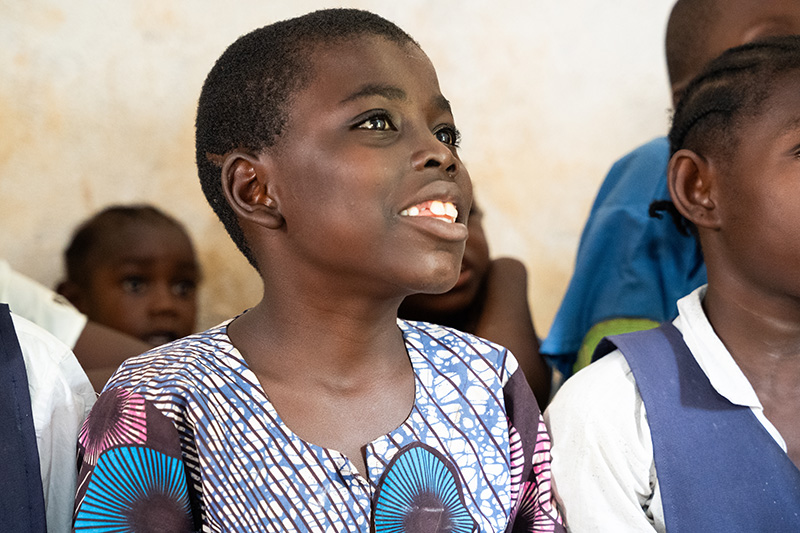
Toe, now 12, is back in school, playing soccer, and thriving.
Building a Stronger Surgical Team
Toe’s survival depended on the complex surgery, but also on the comprehensive care that came afterward. Following surgery, he was placed on a mechanical ventilator, which supports breathing for patients who can’t do so on their own. At the time, Critical Care Nurse Specialist Jean De Dieu Kayumba was one of the only staff members who knew how to properly use the ventilator, leaving him with little opportunity to take a break.
There were already limited nurses, which “was a little bit challenging for me,” reflects Kayumba. “We had to improvise, do whatever we could, and stay positive,” he says.
Since then, staffing and training have significantly improved. In late 2025, Kayumba co-led a four-day mechanical ventilator training for 32 doctors and nurses at J.J. Dossen Memorial Hospital. Under Kayumba’s supervision, those trainees have since actively used the skills they learned.
“As we talk, I have a patient on a mechanical ventilator,” says Kayumba. “The same people we trained are the ones taking care of the patient.”
Kayumba also provides ongoing training for recent nursing graduates from nearby Tubman University, a longtime academic partner of PIH Liberia. He teaches them critical care skills, including how to assess, monitor, document, and care for patients in dire condition.
Meanwhile, Toe receives ongoing care at J.J. Dossen Memorial Hospital with follow-up appointments every few months to monitor his motor skills, communication, mental health, and overall development.
Between checkups, Toe and Sebo regularly visit the hospital “just to say hello,” says Ekwen. “When I see him, you wouldn’t believe he had that kind of injury and underwent surgery because he talks and he plays like any other child.”
Ongoing Impact, Improvements
Nearly two decades ago, PIH Co-founders Drs. Paul Farmer and Jim Yong Kim described surgery as the “neglected stepchild of global public health,” stating that expanding access to safe surgical care is essential to achieving health equity. They explicitly mentioned that severe trauma from road accidents disproportionately impacts the world’s poorest communities because surgical care isn’t available.
In rural Liberia, that gap has steadily closed since PIH began working in West Africa more than a decade ago. Surgical cases have been on the rise since 2018 when Ekwen, nurse anesthetists, and an obstetrician were hired. Since 2019, the emergency room staff at J.J. Dossen Memorial Hospital have performed more than 3,500 lifesaving surgical and trauma care procedures.
Toe’s first-of-its-kind operation at the hospital in 2022 marked a turning point, giving staff firsthand experience in managing severe traumatic brain injuries, leading to more lifesaving procedures like his.
“We began with Dennis, but the success with his case encouraged us to do this for other patients,” says Ekwen.
Since then, the team has performed similar brain surgeries on several other patients, including most recently a young man whose skull was crushed after a tree fell on him.
With ongoing investments in the “five S’s”—staff, stuff, space, systems, and social support—PIH Liberia is ensuring that lifesaving surgical care is available for all.