6 Tech Innovations Improving Tuberculosis Care
Learn about technologies strengthening care in Lesotho.
Posted on Mar 16, 2026

At Partners In Health (PIH), we take a community-based approach to tuberculosis (TB) treatment. This means bringing care and resources directly to hard-to-reach areas, collaborating closely with local leaders and neighbors, and keeping patient concerns at the center of care.
In Lesotho, a recently launched initiative—called the TB Elimination Project—is deepening community outreach by bringing screening, diagnosis, and care directly to people most at risk of TB, the world’s deadliest infectious disease. The project is built around an innovative, multipronged approach known as the universal access search, treat, and prevent approach—learn more here.
Over five years, PIH Lesotho seeks to detect and treat an additional 5,151 people with TB, significantly reducing TB incidence in the country. Digital tools and diagnostic technologies play a key role in the project, drastically increasing TB detection. Below, learn about six tech innovations improving tuberculosis care in Lesotho.
1. Mobile X-ray Trucks
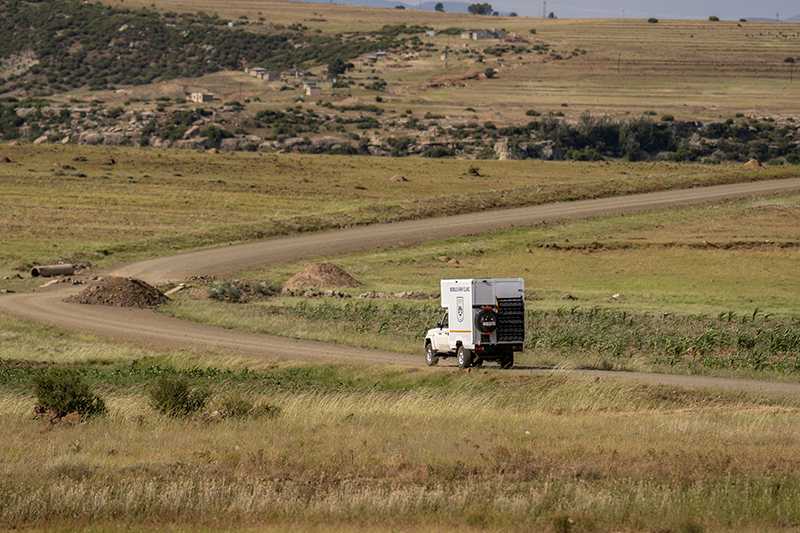
Box trucks were converted to mobile X-ray clinics, equipped with technology to provide screening, education, and follow-up care directly in communities. PIH Lesotho currently has three of these trucks in its fleet, which provide weekly outreach to Mohale’s Hoek District—a rural region with a population of approximately 153,000 people. Each outreach team includes a doctor, two nurses, a laboratory technician, and an X-ray assistant. From September 2025 through February 2026, the mobile trucks have screened 2,237 people for TB, tested 1,712 people for TB, and diagnosed 47 people with TB.
2. Digital X-ray Machines
TB diagnosis relies on chest X-rays, as the infectious disease usually attacks the lungs. The trucks are equipped with digital X-ray machines, which provide instant results on a mobile phone, enabling rapid review by a doctor, and timely next steps for patients. In addition to the truck-based machines, staff also use portable digital X-ray machines. The portable machines are compact enough to travel via horseback to reach patients living in communities without road access.
3. Portable Ultrasound Devices
PIH Lesotho uses portable ultrasound devices that connect to a tablet or smartphone. They’re designed for whole body imaging and allow clinicians to detect TB in other parts of the body, beyond the lungs. The ultrasound has artificial intelligence (AI)-supported features that help clinicians capture and interpret images. Two of the mobile trucks are equipped with portable ultrasound devices. The devices are also used across all PIH-supported rural health clinics and Botšabelo Hospital—where, in 2007, PIH and Lesotho’s Ministry of Health launched the country’s first treatment, care, and support program for people with multidrug-resistant TB.
4. TB Hunter
TB Hunter is a data system, designed by PIH Lesotho, that enables real-time management of cases, tracks linkages to care, and supports contact tracing efforts. The digital system incorporates teleradiology and geographic information systems (GIS) to monitor data across PIH Lesotho’s seven rural health facilities. Through teleradiology, medical images are shared remotely with a full-time radiologist—based in Maseru, the country’s capital—who provides expert interpretation and feedback to frontline clinicians at rural health clinics. GIS technology is used to identify and map TB hotspots, enabling targeted follow-up in areas with the highest TB burden. This strategic use of GIS ensures that resources are allocated efficiently, reaching the populations most in need and facilitating the swift containment of outbreaks.
5. Artificial Intelligence
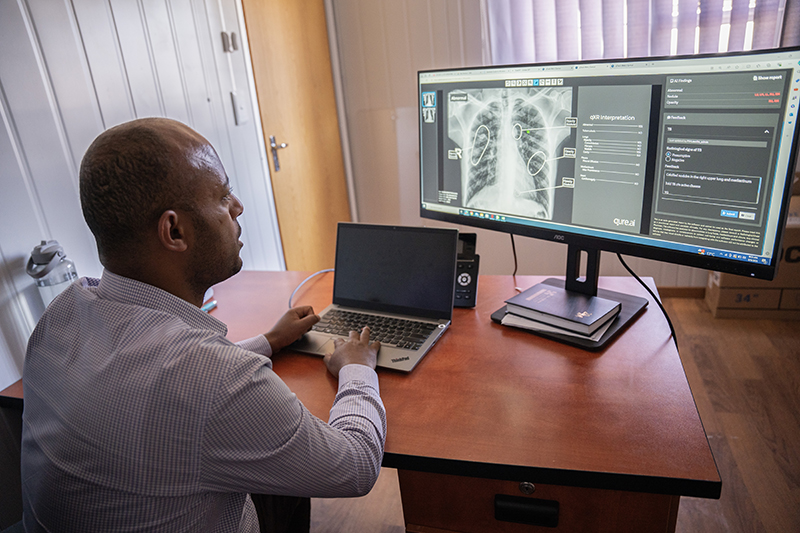
AI software analyzes patients’ chest X-ray images and determines if the patient has been affected by TB in less than one minute. This computer-aided detection tool helps clinicians prioritize patients who need further testing. AI is also used with the portable ultrasound devices, allowing for faster diagnostics and care.
6. Smart Pill Boxes
Digital adherence technologies, such as smart pill boxes, help patients keep up with their TB treatment by sending medication reminders, logging doses in real-time, and allowing remote monitoring by health care staff. This approach has helped replace directly observed therapy, which involves watching people take their medications. In the coming months, the smart pill boxes will be used in Mohale’s Hoek District.
Learn More
Follow a timeline—spanning decades—showing PIH Co-founder Dr. Paul Farmer's contributions to improving TB treatment, research, and policy globally.