A Decade of Progress: UGHE Reaches 10-Year Milestone
How the University of Global Health Equity has become an international model for health education in just 10 years.
Posted on Feb 12, 2026

About a decade ago, a small group of determined, passionate leaders set out to create a new kind of health education.
They called it the University of Global Health Equity (UGHE)—an institute of higher education where equity was not just a unit during the semester, but a thread woven through every course taught and decision made.
It was built incorporating knowledge from Partner In Health’s (PIH) decades of success in community-based health treatment, and aims to increase health care education. Africa was a specific focus, as the continent’s health workers bear 24% of global health burdens but have just 3% of the world’s health workforce.
UGHE was established by PIH and co-founded by the late Dr. Paul Farmer and then-Rwandan Minister of Health Agnes Binagwaho. A band of Rwandan Ministry of Health members, Harvard University faculty, and PIH employees joined together to deliver the university’s first courses.
The university's creators wore many roles—with some of its first employees working to establish the university while simultaneously teaching within it.
UGHE’s leaders worked tirelessly and stretched into numerous roles to bring this pioneering school to life, with transformative support from the Government of Rwanda, Cummings Foundation, and Gates Foundation.
In the last decade, UGHE has rapidly grown from an ambitious startup to a robust, fully fledged university with a 5,200 square meter (or approximately 56,000 square foot) campus, numerous degree programs, impactful research, and international recognition as a model for the future of health education.
This is how we got here.
September 2015: Here Comes Cohort 1
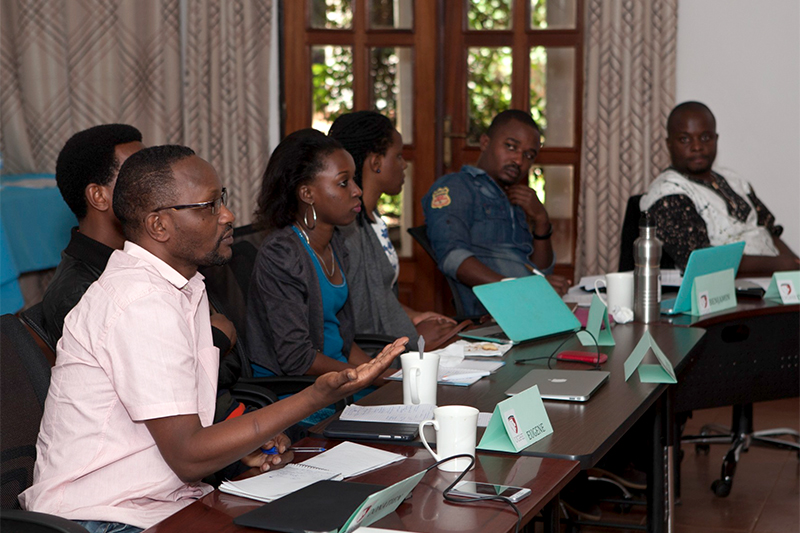
After becoming accredited, UGHE’s founding faculty brought 27 students into UGHE’s flagship degree program, the Master of Science in Global Health Delivery (MGHD), which was modeled after a similar program at Harvard University’s Medical School.
The 18-month program focuses on systems, not symptoms. It includes a range of core topics, from epidemiology to finance to global health policy.
The inaugural class of MGHD students took a leap, joining UGHE before it even had a permanent campus.
Instead, students began their education both in Rwanda’s capital city, Kigali, and the rural Eastern Province, where PIH worked with the Rwandan Government to renovate the Rwinkwavu District Hospital.
Despite not yet having a permanent campus, UGHE leaders knew it was imperative to educate students in a resource-poor setting grounded in real health system experience, not academic hypotheticals—so this is where class began for these pioneering, passionate, and daring students.
July 2016: Construction Begins in Butaro
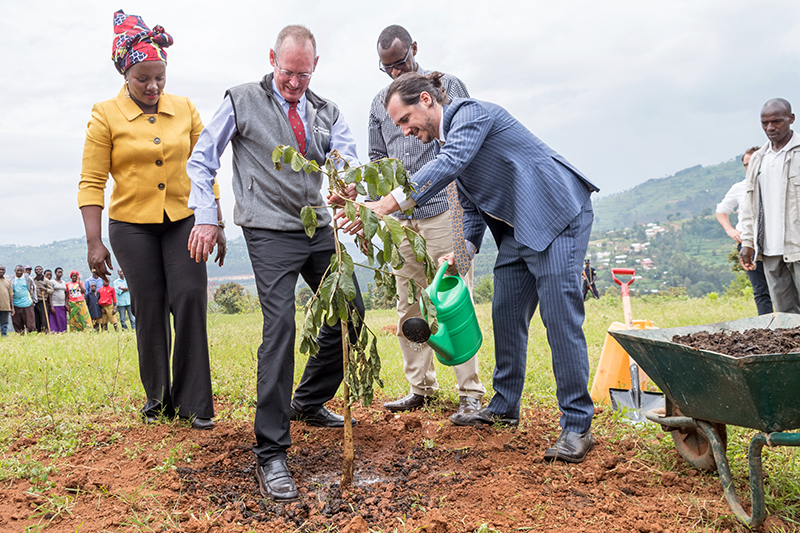
UGHE’s permanent campus was earmarked for a rural, hilly region in Rwanda’s northern Burera District.
Years before, Farmer had scoured those hills to find a place for one of the country’s last district hospitals. Weeks later, the Government of Rwanda generously approved for the Butaro District Hospital to be built, which began the process of reestablishing health care in the region.
When it came time to decide where UGHE would be located, Butaro seemed a natural fit. Students would get to witness—and even contribute—to growing the region’s health system. In addition, they would learn in a resource-poor setting, and understand the specific challenges it poses.
As future health leaders focused on equity and systems building, this was essential.
Campus construction began in July of 2016, with the official groundbreaking taking place a few months later.
May 2017: First UGHE Graduation
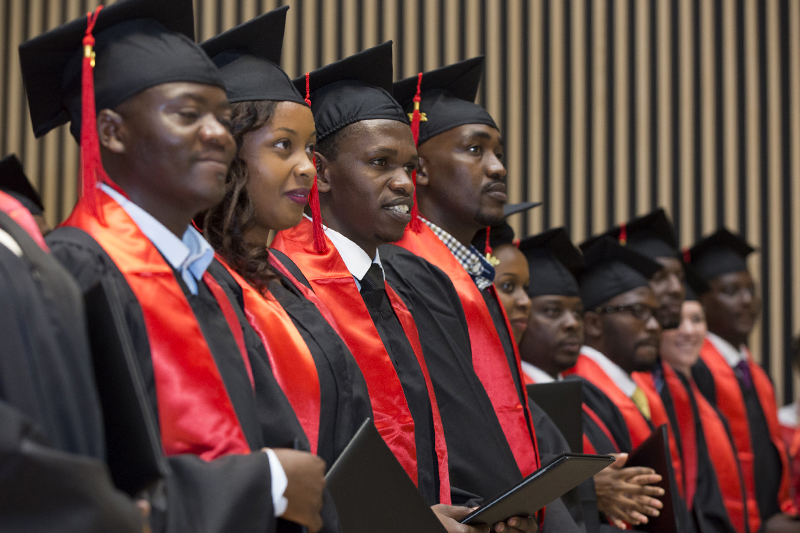
More than 20 students became the inaugural cohort to graduate with UGHE’s MGHD degree, going out into the world as the university’s first graduating class.
His Excellency Rwandan President Paul Kagame, the President of the Republic of Rwanda, attended the ceremony and spoke to the graduates directly.
“This initiative started a few short years ago, with the subversive idea that world-class health education could be delivered in Africa,” President Kagame said at the time. “Today, it is a reality. I wish to thank Partners in Health, and especially our old friend, Paul Farmer, for working together with the Rwandan team to see it through. You can be assured of our continued support as this institution grows, into a beacon of excellence, in our country and our region.”
Members of this class have gone on to achieve exceptional goals, from one graduate winning the Rising Star Award by the World Federation of Societies of Anaesthesiologists to another joining the United Nations Children’s Fund.
By 2018, more than 300 students applied for 24 spots in this degree program.
January 2019: Campus is Open!
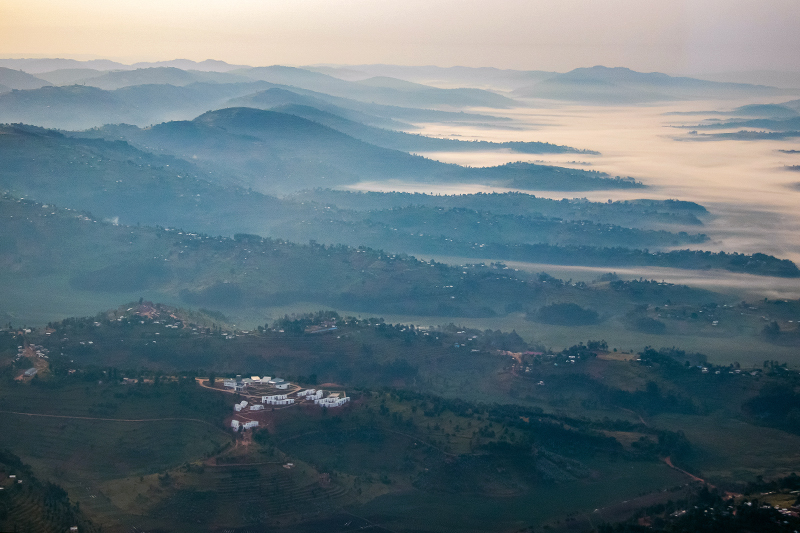
After years of construction, UGHE’s permanent campus was completed.
Built on a hilltop in Butaro, the world-class campus has six academic buildings, dormitories and apartments for more than 200 students and staff members, athletic facilities, library access, and more.
Kagame officially inaugurated the campus with a ribbon cutting ceremony on Jan. 25, 2019.
July 2019: First Class of Medical Students

UGHE staff moved quickly to expand degree program options and began offering a 6.5-year dual medical degree program just a few years after opening.
A cohort of 30 students joined the inaugural class, regardless of their income. Instead, their admission was based on academic excellence.
In return for their studies to be completely cost-free, the students agreed to work as doctors in resource-poor regions in Rwanda for five years after graduating.
These first students were taught by Farmer, who was their professor, and joined them on clinical rotations. They have been dubbed “Paul’s Class” in the years since, and many members of this first cohort still keep the lessons Paul taught them in the forefront of their minds as health care workers.
February 2022: UGHE Honored by UNESCO
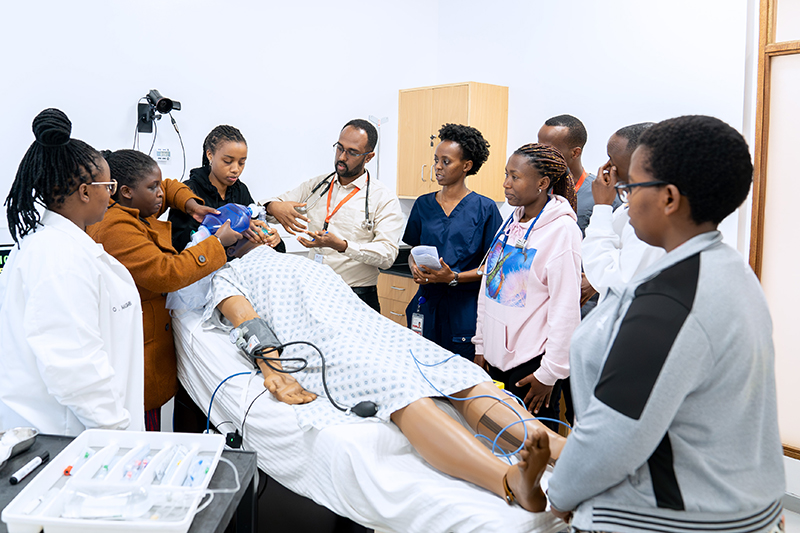
The United Nations Educational, Scientific and Cultural Organization (UNESCO), or the educational arm of the United Nations, recognized UGHE as a model for global health education in its 2022 rankings.
This acknowledgement marked a significant milestone for UGHE, and for the role the university has in furthering health equity.
November 2024: UGHE Ranked #4 University in Sub-Saharan Africa
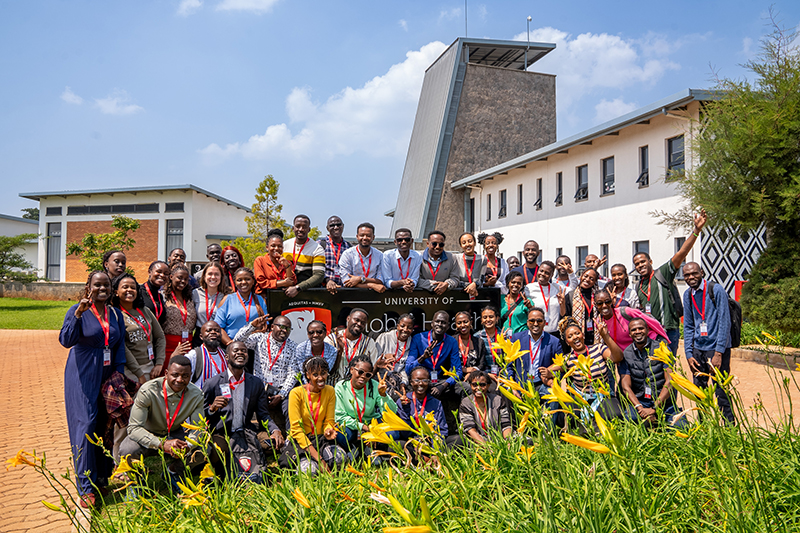
In less than 10 years after opening, UGHE was ranked #4 in universities for sub-Saharan Africa, according to the 2024 Times Higher Education analysis.
Universities were scored on a variety of categories, from resources and finance, access and fairness, student engagement, ethical leadership, and impact on Africa. UGHE was the #1 scorer for the student engagement category, which includes the quality of teaching, critical thinking skills, experience, and practical courses.
It also scored #3 for impact on Africa, and #4 for ethical leadership out of 129 universities from 22 countries.
January 2026: First Dual-Degree Medical Students Graduate
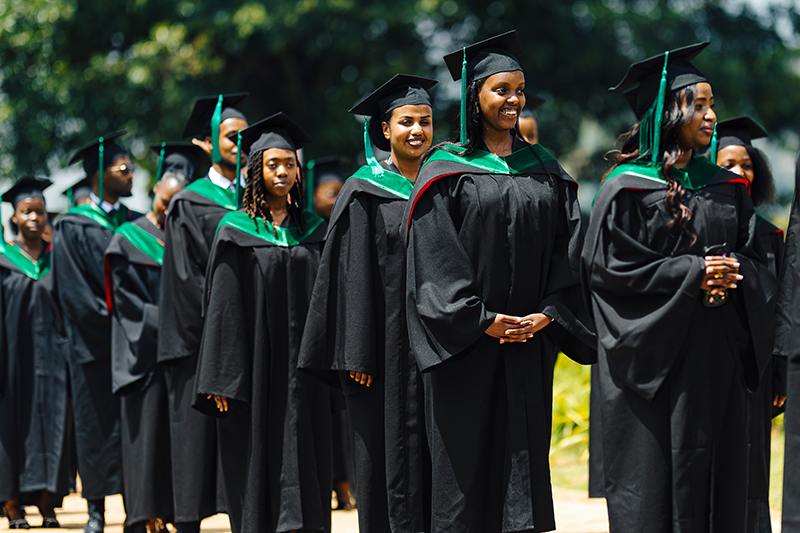
For more than a decade, UGHE’s supporters and partners have been looking forward to the moment when medical students would graduate from the university.
In January of 2026, that vision became reality.
All 30 of the students who joined UGHE’s inaugural MBBS-MGHD dual medical degree program graduated.
During their time at UGHE, students explored long-held passions and discovered new ones—with interests spanning pediatrics, cardiothoracic surgery, obstetrics and gynecology, and more.
Each graduate has committed to working with underserved populations for five years as employees of Rwanda’s Ministry of Health, sharing their expertise to promote health equity and support their communities.