Nurses of the World: Leading with Compassion, Creativity in Peru
Daniela Puma Abarca utilizes skills she learned as a nurse to help her lead and manage over 20 projects for Partners In Health in Peru
Posted on May 7, 2026

Editor's Note: This piece is part of a series highlighting the vital role nurses play in health care systems around the world. Look out for more stories on nurses from Partners In Health (PIH) sites leading up to International Nurses Day on Tuesday, May 12.
When Daniela Puma Abarca, head of the program management directorate for Socios En Salud (SES), as PIH is known in Peru, was still a student, she met a patient who would ultimately have a significant effect on how she approached her role as a nurse.
Puma Abarca was doing her clinical rotations at the national Children’s Hospital, which receives patients from all over Peru. One of her patients was a young boy who had been brought to the hospital from a region in Peru that lacked access to specialized pediatric care. His family lacked resources for the trip, but they wanted answers for their son, who had dreamed of becoming an athlete, but due to an accident, wasn’t even certain he would ever walk again.
During his hospital stay, the young boy seemed unable to gain any weight, which Puma Abarca found unusual.
“After investigating further, I discovered that he was saving portions of his food to give to his father, who had neither the resources nor a place to get a meal,” she recalled. “The boy would pretend to eat just to ensure that his father could.”
Puma Abarca brought this to the hospital’s attention. Thanks to a collaborative effort with the hospital’s volunteer staff, they were able to provide support to the father, supplying him with daily meals and a place to spend the night. This holistic approach to patient care has been paramount in Puma Abarca’s career since then.
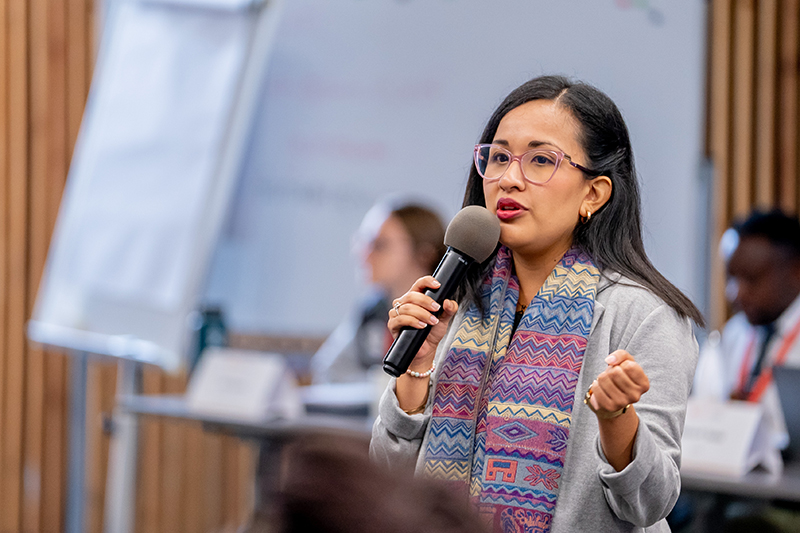
“This experience allowed me to grasp the profound social disparities that exist in our country,” she said. “As well as the importance of building trust with patients, looking beyond the obvious, and never hesitating to act when we have the power to do something more.”
A Path Beyond the Beside
Since childhood, Puma Abarca had always known she wanted to work in health care. But it wasn’t until her experience in nursing school that she discovered the impact she could have, even beyond the bedside.
“Since childhood, I have considered myself a curious person, driven by a desire to seek out new experiences and face new challenges,” Puma Abarca shared. “I studied nursing in Peru at the Universidad Peruana Cayetano Heredia. Initially, I intended to specialize in emergency nursing or pursue a path in oncology; however, during my studies, I discovered that my greatest interests lay in epidemiology, research, and community health. “
Her first job out of nursing school was with SES as a field nurse for Proyecto “Epidemiología de la Tuberculosis Multi Drogo Resistente,” or Proyecto EPI—one of the largest studies on tuberculosis (TB) epidemiology in Peru.
In this role, Puma Abarca found deep fulfillment in her experience, learning both from patients and the health professionals around her. She dedicated her days—often from 5 a.m. until at least 9 p.m.—conducting home visits, collecting samples, administering diagnostic tests, assessing patient signs and symptoms, and completing follow-up care in line with research protocols.
“Although I would return home quite late—typically around 9 or 10 p.m.—I felt a deep sense of fulfillment from the work I had accomplished and from the gratitude expressed by the people I served,” she said. “A simple smile or a 'thank you' was enough to give meaning to every single day.”
A Desire to Understand
Over time, Puma Abarca fell in love with the research side of her work, which led her to pursue a master's degree in clinical research with a scholarship from the Peruvian government. Several years later, she returned to SES as a project coordinator to implement a pilot project for active TB case finding—which she notes was one of the greatest challenges of her career.
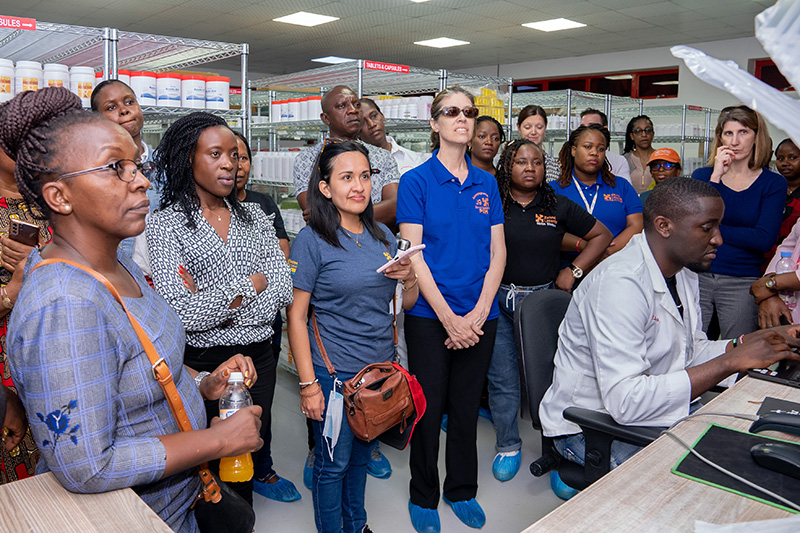
“At first, it was a challenge to convince my family that a nurse could work outside of a hospital or clinic, engaging in community health and research,” Puma Abarca said. “Now, my professional life revolves around management, project implementation, and research—a combination I consider essential for continued growth.”
Puma Abarca now serves as SES’s head of the program management directorate, providing support to over 20 projects—including several TB initiatives expanding care through access and prevention through active case finding—from their initial formulation through to their completion. She credits her experience as a nurse for her success as a leader.
To support her professional development in this role, Puma Abarca participated in PIH’s fourth cohort of the Global Nurse Executive Fellowship (GNEF), a 12-month fellowship that aims to invest in the leadership of nurses and midwives. This experience provided her with tools that not only helped her own personal and professional growth but also taught her how to best support the growth of others.
“It marked the first time I experienced mentorship firsthand,” she shared. “It’s a practice I now strive to replicate in my own team, with the aim of ensuring that we all grow in alignment with our goals.”
A Voice That Demands to Be Heard
Nurses and midwives, including Puma Abarca, are an important part of SES. Within the organization, many leadership positions are held by these professionals. Throughout SES’s 30-year history, the organization has championed key public health strategies—many of which have been led by nurses, an anomaly in health care settings in Peru.
“The nursing and midwifery group constitutes one of the largest and most organized cohorts within the health care system,” Puma Abarca said. “Nevertheless, resistance persists regarding the notion that non-medical personnel can take the lead in health management... Ours is a voice that demands to be heard.”
What makes Puma Abarca most proud in her current role is seeing her team step into new roles and lead projects. The foundations of her leadership are the same qualities that she utilized in nursing school to dig deeper with her patients—active listening, empathy, proactivity, and a holistic perspective on people.
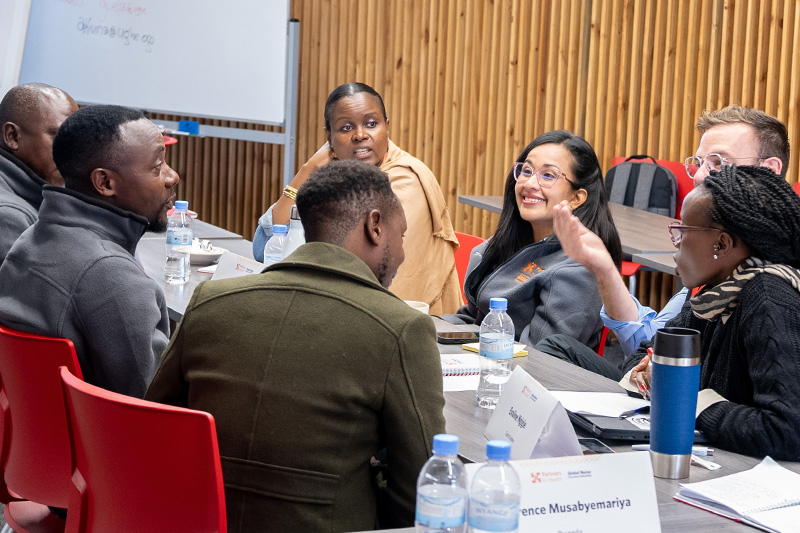
She hopes to see the number of nurses in leadership positions continue to grow, as she credits her experience as a nurse for her success as a leader.
“Nursing has been pivotal in my professional development,” Puma Abarca said. “While academic training is important, the experience gained through working with patients, internships, and various job roles has been fundamental in enabling me to face and overcome diverse challenges.”
Read On
Meet Phalone Louis, a PIH nurse in Haiti who used to clean the hospital. Now, she treats patients in it.