A Young Mother’s Recovery from Paralysis in Sierra Leone
In Sierra Leone, maternal and child health care services are being transformed through an initiative called QEHSSSP.
Posted on Nov 17, 2025

On her way to collect her report card, Fatmata Foday, a 23-year old student and expectant mother, suddenly fell and couldn’t get back up.
Her symptoms worsened over time, leading her to seek care at Partners In Health (PIH)-supported Jojoima Community Health Center in Sierra Leone. There, Foday—who was four months pregnant—was diagnosed with extrapulmonary tuberculosis (TB), a form of TB that’s located outside the lungs. In her case, the infection affected her spine, leaving her unable to move her legs.
Jojoima Community Health Center is one of 179 facilities supported by the Quality Essential Health Services and Systems Support Project (QEHSSSP), an initiative led by PIH Sierra Leone in partnership with the country’s ministry of health and funded by the World Bank. QEHSSSP aims to expand and improve access to quality maternal and child health services across five rural districts, ensuring that patients like Foday receive vital services regardless of their location.
At the heart of QEHSSSP’s success are the “five S’s”—staff, stuff, space, systems, and social support—which are the essential foundations of a strong, stable health system. Each of these elements shaped Foday’s journey of recovery.
Staff
Due to QEHSSSP, Jojoima is now staffed by clinicians and midwives who receive continuous training, mentorship, and supervision. “After a virtual consultation with one of our specialists, we started her [Foday] on anti-TB medication and she began to improve,” explains Augustine Amara, a surgical community health officer. Ongoing mentorship and on-the-job coaching for clinicians like Amara ensure that complex cases can be handled effectively, even in rural facilities. Last year alone, 1,780 clinicians participated in trainings covering topics such as short- and long-term family planning and emergency response during childbirth—strengthening care for patients like Foday when they need it most.
Systems
After two weeks at the facility, Foday’s husband discharged her against medical advice. “He told me that he wanted to take me to an herbalist because he believed it was a ‘native’ problem,” recalls Foday. By native, she was referring to his belief that the illness was caused by spiritual forces, a common myth in Sierra Leone and other countries, which PIH is actively dispelling through community education. “Everyone at the hospital tried to counsel Fatmata and her husband but it didn’t help,” emphasizes Aminata B. Kamara, a midwife at Jojoima Community Health Center.
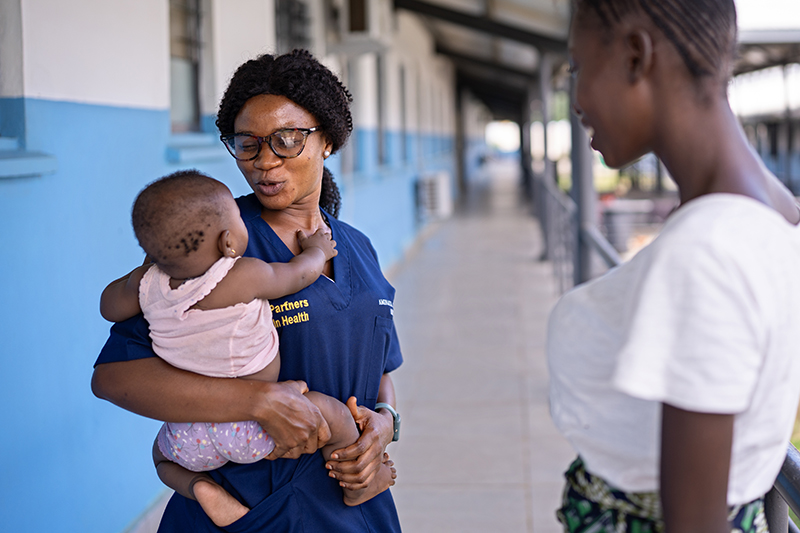
But when Foday returned around 28 to 30 weeks into her pregnancy—this time “in a wheelchair, malnourished, and complaining of urine retention,” as Kamara describes––Jojoima's strengthened systems ensured she could be readmitted swiftly. Improved referral pathways between health centers, community health workers (CHWs), and district hospitals now allow for smoother coordination of care, while strengthened record keeping and facility management mean that patients like Foday are never lost to follow up.
Space
By the time Foday reached full term, she was admitted to Jojoima’s renovated maternity ward—one of many safe and functional spaces newly established under QEHSSSP to provide dignified, around-the-clock patient care. Due to her paralysis, she underwent a cesarean section (C-section) to safely deliver her baby. Facility infrastructure has been thoughtfully redesigned to optimize patient flow and uphold infection prevention and control standards, and ongoing maintenance ensures that essential services such as water, electricity, and fuel remain reliable to support continuous, high-quality care delivery.
Stuff
After the C-section, Foday slowly began to regain mobility, able to lift her legs and arms again. Access to essential tools and resources—such as anti-TB medication, oxygen cylinders, and surgical supplies—made her recovery possible. Thanks to QEHSSSP, these items are now consistently available at Jojoima. The oxygen cylinders are supplied from the oxygen plant at Kailahun Government Hospital—saving time, money, and resources. Previously, it took at least one week to fill the cylinders; now, it takes three days. Other critical supplies—such as gloves, face masks, infant radiant warmers, and doppler fetoscopes for monitoring babies’ heartbeats—are consistently stocked, ensuring that both mothers and newborns receive the services they need and deserve.
Social Support
Alongside medical treatment, a key part of Foday’s recovery was the dedication of the nursing team. Nurse Fatmata, who coincidentally shares the same name, took her care to heart and became personally invested in her healing journey. “She helped me bathe, washed and braided my hair. She would take me outside in a wheelchair so I could get some fresh air,” shares Foday. Through QEHSSSP, Jojoima now provides basic necessities and nutritional support for mothers and children, including guidance on cultivating home gardens using the hospital garden as a learning space. These efforts reflect PIH’s philosophy: to treat the whole patient, not just their condition.
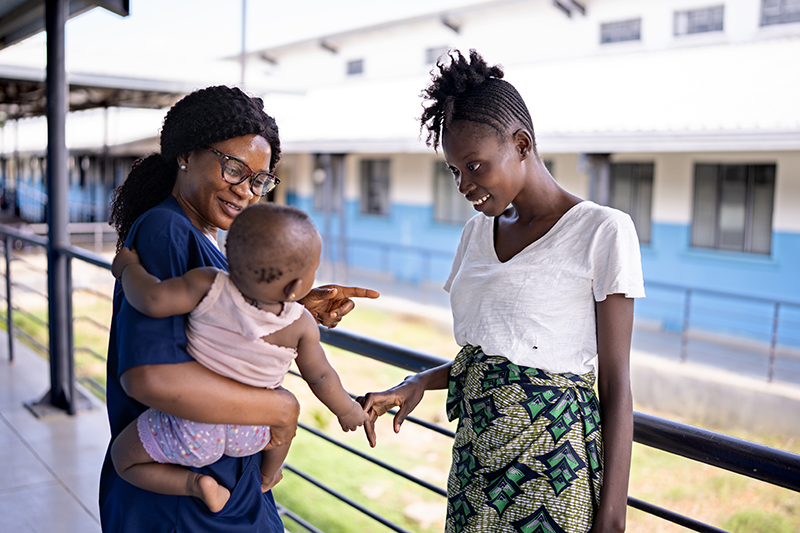
Foday’s story is one of many that clinicians at Jojoima Community Health Center encounter every day. In the first quarter of 2025 alone, the health center recorded over 2,000 visits in the outpatient department and performed over 100 deliveries. Once a quiet rural clinic, Jojoima is now bustling with activity. It’s proof that with the right staff, stuff, space, systems, and social support, quality health care is always possible.
As QEHSSSP continues to evolve, its goal remains the same: to improve maternal and child health for Sierra Leoneans, no matter where they live.