“I Feel Ready for Anything”: Nurses Reflect on PIH Fellowship
Hear from nurses working in Sierra Leone, Liberia, and Malawi.
Posted on Nov 19, 2025

Evaline Ngige dreaded public speaking for years.
Then, last month, she presented a speech to the president of Sierra Leone, dignitaries, and dozens of visitors.
“Welcome to the mother’s dormitory,” Ngige, nurse manager for Partners In Health (PIH) Sierra Leone, confidently said during a guided tour of the Maternal Center of Excellence, following the inaugural ceremony. “The space provides women with a safe, dignified space to stay, allowing them to remain close to their babies without the burden of daily travel.”
Once shy and afraid, Ngige credits her newfound confidence and abilities to the Global Nurse Executive Fellowship (GNEF). During the yearlong program, fellows hone their leadership skills, from working with a public speaking coach, giving presentations, identifying their leadership style, improving human and finance management, and more.
“GNEF really contributed a lot. They prepared us well,” says Ngige, a third cohort graduate. “We are not the same people. I take pride that I’ve changed. I feel ready for anything.”
Since 2017, the fellowship has facilitated the development of culturally humble and confident nursing and midwifery leaders who address current and emerging global health challenges by transforming health systems and, ultimately, improving population health.
Each year, the fellowship selects at least 10 participants from among senior and executive nurse leader applicants at PIH clinical sites around the world. Through cross-site collaboration, fellows gain theoretical knowledge and practical skills to succeed in executive positions.
Throughout the program, participants learn about three keys areas of leadership: self, others, and systems. The weeklong “leading self” intensive—designed to increase self-awareness and identify leadership style—was especially impactful for Mphatso Sayenda, nurse educator for PIH Malawi and fourth cohort GNEF graduate.
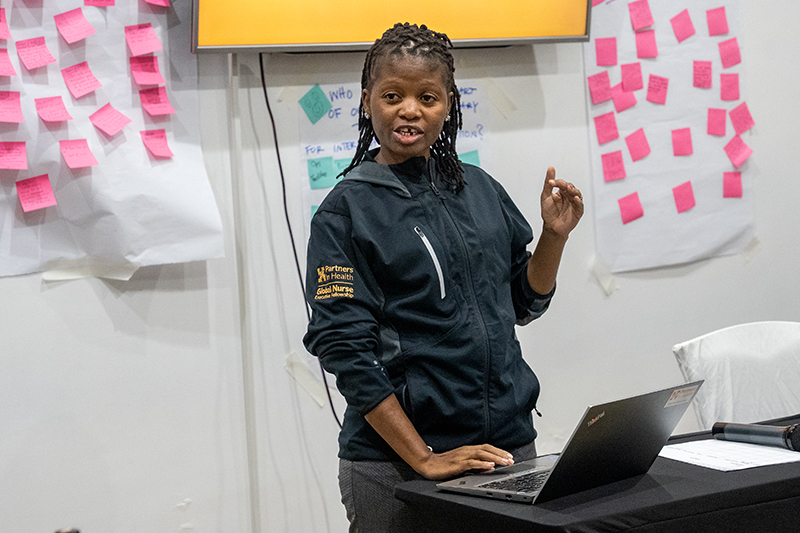
Sayenda was surprised to find she didn’t know herself as well as she thought. Through self-reflection during the program, she learned her strengths, areas for improvement, and how to adapt to effectively lead others.
Previously a strict leader, she says her mindset was “work, work, work,” dismissing breaks and enjoyment. Now, Sayenda has a new perspective: “I learned that it’s good that sometimes we give room for people just to have the social time that helps the team to come together.”
She put her new learnings into action while introducing one of her GNEF projects, centered around routine urine testing for women. Instead of immediately diving into work, she took time to get to know the midwives carrying out the initiative, ensure they were on board with the work, and found time to have fun along the way.
“Celebrate the small wins,” suggests Sayenda.
International partnership, support
By knowing oneself, GNEF fellows can be more effective when “leading others”—the focus of the second, weeklong intensive in the program. This portion includes building and maintaining partnerships, and leveraging diversity and difference.
“Leadership means being someone who can create something that people can positively follow,” says Sayenda. “It also means being able to captivate the good initiatives that people have and bring them to light, so that together you are able to bring positive change in terms of patient care.”
Afterall, patients are “our bosses,” in Malawi and across all PIH care delivery sites. At PIH, we believe any meaningful social progress is only born out of true solidarity and partnership. That partnership includes patients, and extends to national governments, local districts, public and private sectors, academic institutions, advocacy groups, and others—all of whom believe health care is a human right.
PIH’s broad perspective on partnerships was eye-opening for Martha Kutsamba, district nursing and midwifery officer for Malawi’s Ministry of Health and fourth cohort GNEF graduate.
Previously, she believed leadership meant leading the nurses in her district—and no one else.
“After undergoing the fellowship, the vision now broadened,” says Kutsamba. “I also need to be concerned with what happens in the entire system."
By being involved with other departments, together they can continually learn and improve. GNEF also expanded her network to fellows from various countries, ultimately impacting her professional development and PIH Malawi’s nursing staff.
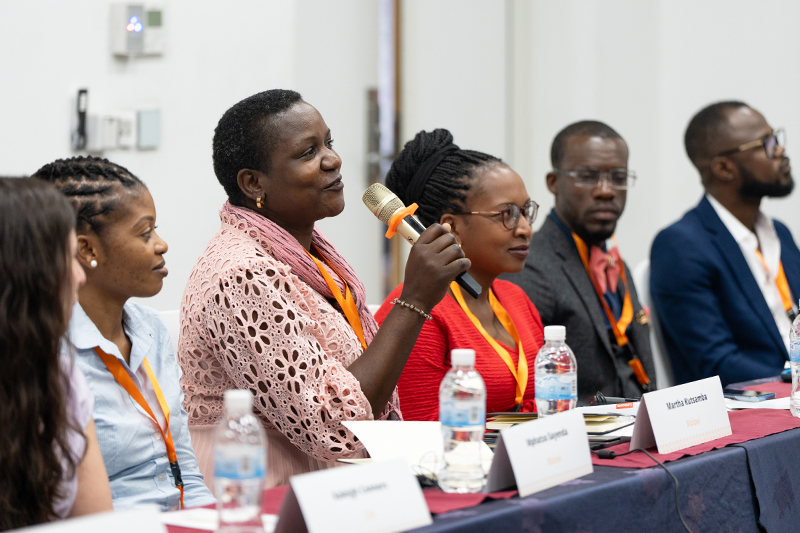
“Collaborating with the fellows from other countries has impacted my leadership a lot,” reflects Kutsamba. “Most of the time in the African countries, our challenges sometimes are kind of similar, but maybe the approaches that we use to address those issues could be different depending on your capabilities.”
In Sierra Leone and Liberia, PIH addressed the nursing shortage by recruiting recent nursing graduates into newly formed mentorship roles. Kutsamba learned of that work from Marshall Sackey, a GNEF graduate and nursing lead for PIH Liberia.
When facing the same problem in Malawi, Kutsamba and others created a similar initiative. “And it worked,” she said proudly, noting some of the nurses are now full-time employees.
Global leaders, lasting change
Carrying out such initiatives are part of the third and final, weeklong intensive centered around “leading systems.” This area focuses on applying knowledge and developing a capstone project to address systemic problems.
Though the capstone presentation signals the end of the fellowship, projects are sometimes carried out long-term—such as Sayenda’s project to increase the testing of pregnant women for asymptomatic bacteriuria infections at Lisungwi Community Hospital in Malawi.
Upon graduation, fellows are well-equipped to lead. GNEF alumni have gone on to demonstrate their improved leadership capacity through promotions, publications, quality improvement projects, and international acknowledgement. A whopping 76% of GNEF alumni are involved in governing bodies at the regional, national, and international level.
“GNEF, I believe, is kind of a wakeup call to nursing and midwifery and taking full ownership in terms of leadership. At the global level, we can feel represented,” says Sackey. In some instances, nurses may feel the only place for them is at the bedside, caring for patients. However, they’re well-positioned to serve elsewhere.
“A nurse that has served at a bedside, if that person is sent to an executive level, understands what it takes in terms of decision making to impact the care delivery process,” says Sackey. “GNEF is a golden path for nurses and midwives that are coming up in leadership."
Learn More About GNEF
Since 2017, the Global Nurse Executive Fellowship (GNEF) has supported the development of culturally humble and confident nursing and midwifery leaders.