"I Wept With Emotion": First Socios En Salud Cancer Patient in Remission
Early detection and timely support helped María Romero defeat breast cancer in North Lima.
Posted on Apr 2, 2026

Editor’s note: This article was originally published in Spanish on Socios En Salud’s website.
“I wept with emotion... They told me that I had beaten it—that I was in remission...”
María Soledad Romero repeats the phrase again carefully, as if she still doesn't fully believe she’s finally cancer-free.
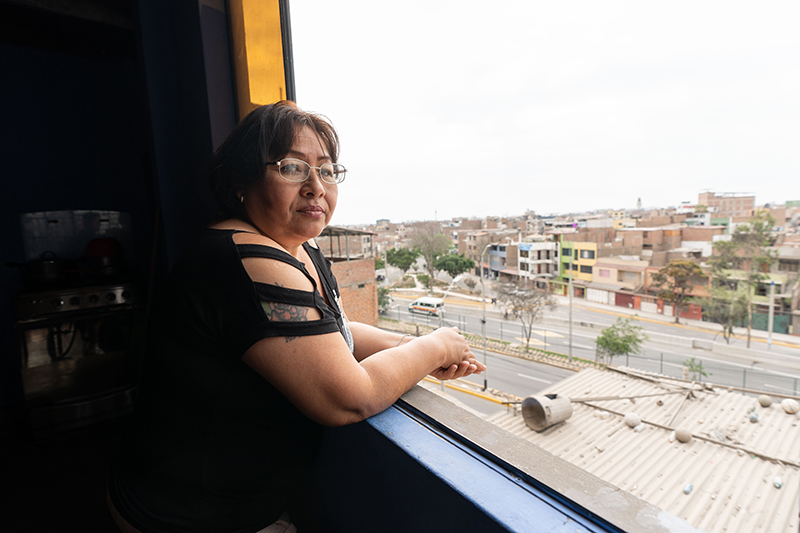
Romero is 53 years old and lives on Túpac Amaru Avenue in Comas—a district north of Lima—where she arrived when she was barely two months old. Since then, she hasn’t left the community.
In 2022, Socios En Salud (SES), as Partners In Health (PIH) is known in Peru, offered free breast cancer screenings through the ALMA project, part of their Noncommunicable Diseases (NCDs) and Cancer program. Through this effort, more than 1,800 women were screened for the first time. Romero was one of them.
Her results confirmed what would alter her life significantly: she had breast cancer.
“A million things went through my mind,” Romero said. “I have a son, three grandchildren. In that moment, I thought of them. More than myself, I thought of them.”
After receiving her diagnosis, Romero was swept up in appointments, paperwork, and impending treatments she still hadn’t fully grasped. She was referred to the National Institute of Neoplastic Diseases (INEN) and tried to come to terms with her new normal.
In those early days, Romero had no idea how significant her journey would be for other women and cancer patients in Peru.
“María is the first person to achieve remission through this intervention,” said Santiago Palomino, head of the NCD and Cancer Program at SES. “At one point, the project had to shift direction—moving beyond just offering screenings—and today, it provides follow-up care to women who have already been diagnosed with breast cancer.”
For Romero, however, the process was just beginning. And though she didn't know it yet, from that point forward, she wouldn't be navigating this illness alone.
The Power of Accompaniment
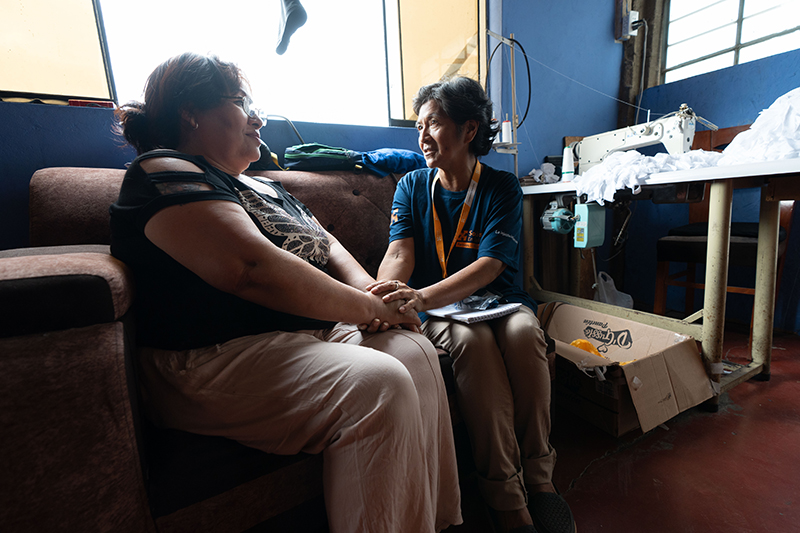
María Rosas, a community health worker (CHW) for SES’s NCD and Cancer Program, remembers traveling with Romero on her first trip to INEN to secure an appointment. At four in the morning, a vehicle from SES came to pick the women up in Comas.
“We had to be at INEN by six a.m. to secure a slot, so that (Romero) could get in and attend her clinic appointment,” Rosas said.
Rosas knows that this initial contact is often difficult. The women arrive bearing the fresh weight of a diagnosis. Sometimes, they are still speechless.
“You don’t always know what to say,” she said. “They are despondent over the results.”
In those moments, the work consists of simply being available: sharing a phone number, repeating instructions, and following up with calls.
This daily work—travel, phone calls, and education—is a core part of treatment for SES’s patients. In the past year alone, SES screened 496 women for breast cancer in North Lima. Of those, 372 received continuous care and support throughout their diagnostic and therapeutic journeys, including Romero.
Early Detection, Better Support
In Peru, breast cancer is the most common cancer among women. Each year, more than 7,000 new cases are diagnosed, and around 2,000 women die from the disease. However, Peru’s Ministry of Health notes that when detected early, the likelihood of women being cured can reach 90%.
Romero has watched friends die from various types of cancer—almost always after receiving a late diagnosis. Upon receiving the news of her cancer, those images returned with overwhelming intensity: weakened bodies, hair loss, and pain that seemed to offer no respite. For several days, the future appeared to her as a succession of scenes in which she had no desire to play a part.
But after her initial shock, Romero began to rationalize her immediate situation. As she prepped herself for the journey ahead, she realized she wouldn't be able to navigate the process alone. Fortunately, she had her family and partner, as well as a support system through SES that extended beyond just medical treatment.
“To date, we are providing clinical navigation support to 20 women with breast cancer,” said Diana Huamán, coordinator of the ALMA project. “This support consists of offering psychological counseling and social assistance to alleviate the immense burden involved in facing this disease.”
As Romero navigated chemotherapy, she was relieved—and surprised—that she could mostly stick to her normal routine. Aside from a trip to the emergency room due to joint pain after her final session of chemo, her work as a seamstress was uninterrupted.
Although she still had a long road ahead, the journey was much less daunting.
No One Fights Alone
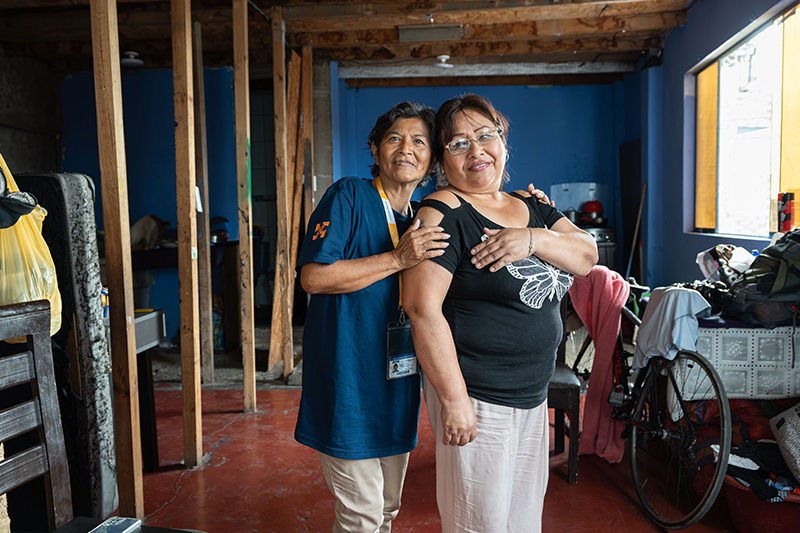
Now in remission, it’s not medical procedures or specific appointments that stand out the most to Romero from her years of treatment, but rather SES’s presence: the phone calls, the messages, and the visits that required no explanation.
“I felt that I wasn’t alone,” she said. “I felt that I had even more family than I already did. It felt so much easier.”
This feeling of presence—of navigating these scary moments surrounded by love and care, rather than loneliness and fear—echoes in the stories of other women who have received care from SES. In 2025, SES CHWs conducted 118 visits to women with breast cancer, with many of these visits ultimately preventing women from dropping out of care. That same year, 22 women who had been diagnosed completed their treatment—hopefully leading to even more women like Romero being declared cancer-free.
Over the years, Romero has borne witness to the profound significance of not having to navigate cancer treatment in isolation. When asked what was critical to her healing, alongside the chemotherapy and medical appointments, she speaks of support and the people who were there from the day of diagnosis in 2022 to now.
For Romero, having companionship transformed her cancer journey. It didn't always make it easy, but it made it possible.